How to Hide Extensions in Very Short Hair
Yes, extensions can look natural in very short hair — but only when the method, placement, color match, and haircut are all working together. The biggest secret isn't adding the most hair. It's creating the cleanest blend. In nearly two decades of working with NYC clients, our stylists have found that layering, strategic placement, and styling the natural hair together with the extensions make the real difference.

A seamless short-to-long transformation starts with the right method, discreet placement, and a custom blend—exactly why so many clients begin with a
one-on-one consultation at ShineTress.
The short answer
To hide extensions in very short hair, you need enough perimeter coverage, a flatter installation method, a tailored cut, and styling that merges your natural ends into the added length. At ShineTress, both tape-in extensions and microlink extensions can play a role, depending on how short, fine, or fragile the natural hair is.
Why very short hair is harder to blend
The shorter the haircut, the more visible the difference between your natural ends and the added hair can become. This is especially true with blunt bobs, lobs, grown-out pixies, and fine short hair that doesn't naturally cover extension attachment points. In our experience, shorter cuts almost always need some layering and blending work afterward to avoid that obvious "shelf" effect where the extensions sit on top of the natural hair instead of within it.
The goal isn't just to add length. The goal is to make the transition invisible. That's why ShineTress builds every install around custom placement, texture, and realistic movement rather than a generic one-size-fits-all application.
Most common giveaway
Short natural ends sitting on top of longer extension hair without enough layering or styling.
Most important fix
A custom cut and blend after installation so your real hair disappears into the final shape.
Best mindset
Think discreet, balanced, and believable—not maximum length in one appointment.
Best extension methods for very short hair
Not every extension method performs the same way on short hair. The best option depends on your density, haircut, texture, and how much natural hair is available to cover the install. ShineTress offers methods that can be tailored to different starting points, especially for clients who want a softer, more undetectable result.
Best for flatness
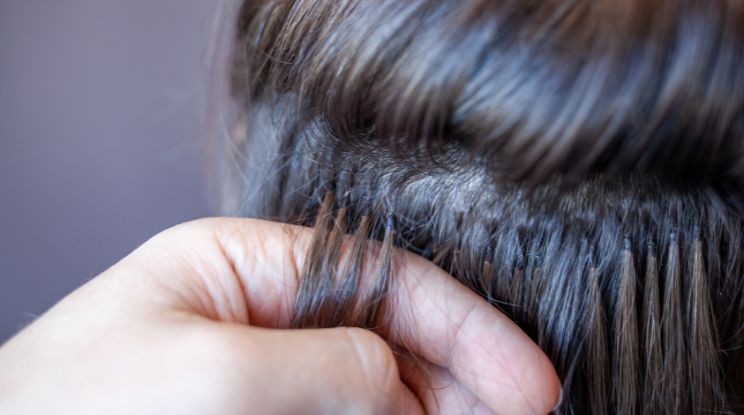
Tape-ins lie flat and undetectable, which is exactly what short hair often needs. They work especially well on fine hair, and mini tape strips or skin weft options can help create a more discreet finish around difficult zones.
Best for flexible movement
Microlinks are attached strand by strand and move more like natural hair, which is useful when short layers need a softer transition. They're also one of the gentler choices for fine, thinning, or fragile hair.
If your hair is extremely short, the consultation matters even more than the method name. Placement, section size, and realistic length choice often make the difference between "beautifully blended" and "obviously added."
How to hide extensions in very short hair: the techniques that matter
1
Keep extensions away from the visible perimeter
One of our most repeated recommendations for short hair is to avoid placing extensions too close to the hairline or visible part. Leaving enough natural coverage above and around the install keeps the attachment points hidden.
2
Use smaller, flatter pieces in tricky areas
Thick or bulky sections are usually the fastest way to expose an install. Smaller options such as mini tapes, thin rows, or carefully placed strand-by-strand pieces work better around the temples, crown, or side areas when the haircut is short.
3
Blend with a cut, not just a color match
Color matters, but shape matters just as much. Layering is essential for blending short hair with extensions, and blunt cuts are among the hardest to blend unless the final shape is softened afterward.
4
Style the natural hair and extensions together
One of the easiest ways to hide that line of separation is to wave, curl, or bend your natural ends together with the extension hair, so the shorter pieces visually disappear into the longer result.
The best extension blend in short hair usually looks effortless—but behind that effortless finish is smart placement, texture matching, and a custom cut.
The nape and side areas are where most short-hair installs succeed or fail
The nape is often the most difficult area because short hair underneath can poke out from under longer extension lengths. A practical technique we use is to pin, braid, or twist the shortest underneath sections so they stay tucked away.
Sideburns and front corners can also expose the install if the extension method is too bulky or placed too high. That's why softer edge placement, mini sections, and realistic face-framing lengths matter so much for short hair clients.
At the nape
Very short underneath hair may need to be tucked, braided, or left out strategically so it doesn't stick out below the blend line.
At the front
The safest approach is subtle density and careful placement so the corners stay soft rather than bulky or obvious.
How much length should you add if your hair is very short?
This is one of the biggest mistakes clients make—they try to jump too far in one appointment. When your starting point is very short, an extreme change in length can make blending much harder. Moderate lengths are almost always easier to blend than very long, dramatic installs.
In real salon work, believable length almost always looks more luxurious than obviously added length. If your haircut is chin-length, collarbone or slightly-below-shoulder results often blend more naturally than waist-length hair added all at once.
Color and texture matching matter even more on short hair
When the hair is short, the eye notices contrast faster. If the extension color is even slightly off, or the texture doesn't move like your real hair, the blend becomes much more obvious. That's one reason ShineTress offers a broad range of tones, including natural roots, balayage, and dimensional shades in our tape-in collection.
Texture is just as important as color. If your natural hair has bend, density, or softness that doesn't match the extension hair, the install can look disconnected—even if the tone is perfect.
Color match
Natural-root shades and dimensional tones usually blend better than flat, single-note color.
Texture match
The more closely the extension hair moves like your own hair, the more believable the result.
Density match
Too much hair can look just as unnatural as too little, especially on fine short hair.
Daily styling tips that help keep short hair extensions hidden
- Use loose waves or soft bends to blur the line between your natural ends and the extension hair.
- Avoid poker-straight styling if your short natural layers are still very visible.
- Brush gently and support the roots so the placement stays neat and flat.
- Keep oils and heavy serums away from the attachment area, especially if you wear tape-ins.
- Sleep with hair dry and loosely secured so short layers don't separate and expose the install.
- Follow a proper hair extension care routine to keep the blend looking polished between visits.
Frequently asked questions
Can extensions really work in very short hair?
Yes, but not every haircut is ready for the same result. Very short hair can absolutely wear extensions beautifully when there is enough coverage, the placement is strategic, and the blend is customized after installation.
What is the easiest method to hide in fine short hair?
For many clients, tape-ins are appealing because they lie very flat and work especially well on fine hair. For others, microlinks offer better movement and a gentler strand-by-strand feel. The right answer depends on the haircut and density.
Do I need layers to hide extensions in short hair?
In many cases, yes. Blunt short cuts are harder to blend, and layering helps soften the transition between your natural hair and the added length.
Can I go extremely long from a pixie or very short bob?
You can add length, but dramatic jumps are harder to hide. A more moderate, believable first install often looks more luxurious and natural than pushing for maximum length immediately.
Want extensions that actually disappear into short hair?
If you have a bob, a blunt cut, a pixie grow-out, or fine short hair and want a result that looks seamless in real life—not just in photos—book a personalized consultation with ShineTress Hair Extensions NYC. Since 2006, ShineTress has helped clients across New York City find the right method, the right density, and the right blend for natural-looking transformation.
ShineTress offers premium hair, customized extension methods, and one-on-one guidance designed to create comfortable, long-lasting, natural-looking results for clients across Manhattan, Brooklyn, Queens, and greater NYC.