1
Lift the roots first
A dense look starts at the scalp area. If the roots are flat, even long beautiful hair can look lighter than it should.
ShineTress Hair Extensions NYC

If you want your hair to look denser, the goal is not just adding more product or teasing the roots until everything feels stiff. Truly full-looking hair comes from the right combination of haircut shape, healthy styling habits, lightweight volume support, and professional methods that create a seamless natural finish. At ShineTress Hair Extensions NYC, fullness is always approached in a way that still looks soft, polished, and believable.
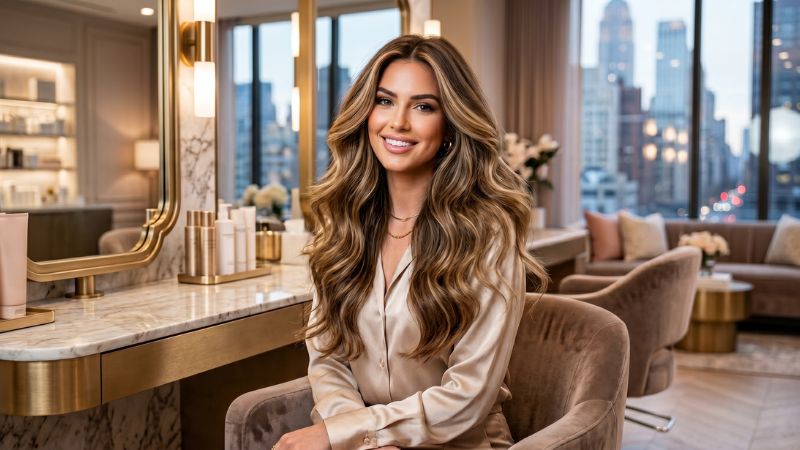
Hair looks denser when there is more visible fullness through the sides, crown, and ends. That can come from better layering, strategic styling, or the right extension method. For many clients, the fastest path to a fuller result is choosing a personalized method through a one-on-one consultation in New York City.
Dense-looking hair usually has three things working together: enough fullness around the perimeter, soft lift through the root area, and a shape that does not collapse through the mid-lengths. When hair is too flat on top, too thin at the ends, or too heavy in the wrong places, it can look finer than it really is. That is why the best results come from structure, not just from styling.
If your natural hair is fine, fragile, or lacking body, adding visible fullness often requires more than a new shampoo. Methods like tape-in extensions for fine hair, microlink hair extensions, or micro weft hair extensions can create a fuller silhouette while still keeping the hair soft and wearable.
When the ends look fuller, the entire style instantly feels thicker and more expensive.
Root support keeps the hair from falling flat and helps the whole head of hair appear more abundant.
Fullness looks best when it is balanced through the crown, sides, and ends instead of concentrated in one area.
One of the easiest ways to make hair look denser is to stop removing too much weight from the bottom. Hair that is over-layered can lose visual fullness quickly, especially if it is naturally fine. A cleaner, more intentional shape helps preserve the illusion of thickness and creates a stronger frame around the face.
If your goal is a fuller overall result, ask for movement without making the ends look wispy. In many cases, denser-looking hair is not about making the top shorter. It is about keeping enough strength in the lower half so the style looks rich, healthy, and balanced.
A dense look starts at the scalp area. If the roots are flat, even long beautiful hair can look lighter than it should.
The middle of the hair should not feel overloaded. Too much heavy product can separate the strands and make hair look thinner.
Soft bends, polished blowouts, and gentle texture usually create a denser appearance than stringy straight ends.
Smoothness matters, but over-brushing can remove body. A polished finish should still keep movement and volume.
Dense-looking hair usually responds well to routines that keep it clean, soft, and lifted instead of coated. If the roots become oily too quickly or the lengths are weighed down by heavy products, the hair can separate and lose that rich, airy shape. A lighter routine often creates more visual density than piling on thick creams.
This is one reason so many clients prefer a personalized plan rather than guessing. A professional recommendation can make the difference between hair that simply feels long and hair that truly looks full.
If your natural hair does not hold fullness easily, the right extension method can change the entire silhouette. The best option depends on your hair density, scalp comfort, texture, and how natural you want the finish to feel day to day.
This method works especially well for many clients with finer hair because it lays flat, looks undetectable, and adds noticeable volume quickly.
Microlinks are applied strand by strand and are a beautiful choice for clients who want a fuller result with a method that avoids glue and heat.
Micro wefts can build visible density through the lengths while keeping the finish smooth and natural-looking.
At ShineTress, the focus is not just adding hair. It is choosing the method that gives you fullness, comfort, and a realistic blend with your natural texture.
The biggest mistake with fine hair is trying to force too much volume too fast. If the root area is overloaded or the ends are over-texturized, the result can look separated instead of luxurious. Fine hair usually looks densest when the finish stays clean, bouncy, and controlled.
For many clients, a flat and natural tape-in method is one of the most elegant solutions because it adds fullness without creating a bulky look. For others, a strand-by-strand microlink application gives flexibility and softness while supporting a more custom placement.
Even after styling, the bottom of the hair still looks light or uneven.
The crown looks good for a short time, then loses shape and volume.
Hair looks coated or separated instead of soft and full.
A tailored plan helps you choose the right method while protecting your natural hair.
Yes. Even if your natural hair is fine, the right shape, styling technique, and extension method can dramatically change how full it appears.
The fastest route is usually a professional method chosen for your exact hair type. A personalized consultation helps determine whether tape-ins, microlinks, or micro wefts will give you the most natural fullness.
Yes, for many clients they are. Tape-in hair extensions are known for lying flat and looking undetectable, which makes them especially appealing when the goal is natural-looking density.
In that case, microlink hair extensions or micro weft hair extensions may be worth exploring, depending on your hair and your desired result.
If you want more body, more fullness, and a finish that still looks natural, ShineTress can help you choose the right path. Whether you want soft volume, a fuller perimeter, or a complete transformation, you can book your consultation with ShineTress Hair Extensions NYC and get expert guidance tailored to your hair goals.