Your hair takes forever to get wet
Water may sit on the surface briefly before fully soaking in, especially if the hair is clean and product-free.
ShineTress Hair Extensions NYC

Low porosity hair is hair with a tightly packed cuticle layer, which means water, conditioners, and oils tend to have a harder time getting into the strand. In simple terms, the hair is not necessarily unhealthy, but it often resists moisture and lets products sit on the surface instead of absorbing them quickly, as explained by Healthline and Living Proof.
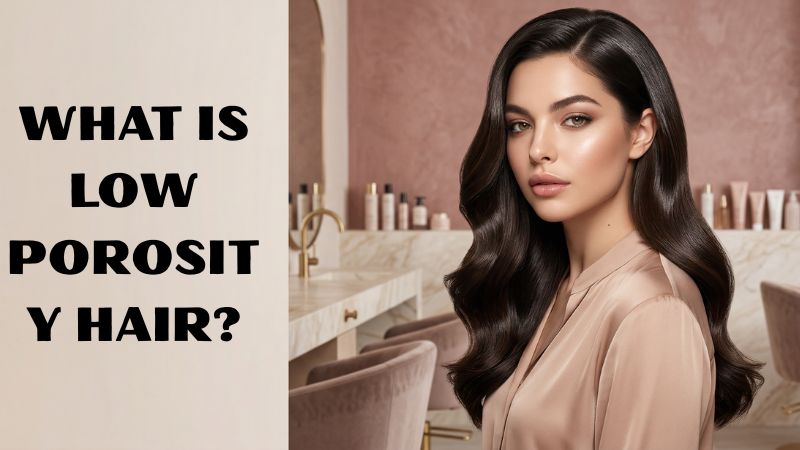
Porosity affects how your hair responds to washing, conditioning, deep treatments, styling creams, and oils. If your hair is low porosity, your routine often works better when it focuses on lightweight hydration, less buildup, and a more intentional product strategy, according to Curlsmith, Mielle Organics, and Living Proof.
Hair porosity refers to how well your hair takes in and holds moisture. With low porosity hair, the outer cuticle is densely packed, so moisture moves in more slowly than it does with medium or high porosity hair. Living Proof describes it as hair whose cuticles are packed so tightly that water and products struggle to reach the inner layers, while Healthline similarly notes that tightly packed cuticles slow water penetration and can make certain products harder to absorb Living Proof Healthline.
Low porosity hair often follows a recognizable pattern. It may take a long time to get fully wet in the shower, a long time to dry afterward, and products may seem to coat the outside of the strand instead of disappearing into it. Healthline and Living Proof both describe these delayed wetting, prolonged dry time, and “products sitting on the hair” behaviors as some of the clearest clues Healthline Living Proof.
If you want a quick at-home check, Curlsmith recommends a spray test: start with clean, product-free hair, mist a section, and see whether the water beads up on the surface instead of sinking in. Curlsmith and Living Proof also mention the popular float test, though it is best treated as a rough indicator rather than a perfect diagnosis Curlsmith Living Proof.
Water may sit on the surface briefly before fully soaking in, especially if the hair is clean and product-free.
Less moisture gets in, but less moisture also escapes quickly, which can lengthen air-dry and blow-dry time.
Oils, creams, and leave-ins may leave residue or heaviness instead of making the hair feel soft and nourished.
Since absorption is slower, low porosity hair can get weighed down faster when too many rich products are layered on top.
In many cases, low porosity is largely genetic. Curlsmith says hair porosity can be influenced by your genes, and Living Proof also describes it as something that can be naturally determined, though outside factors may affect how your hair behaves over time. Healthline adds an important distinction: heat and chemical damage are more commonly associated with higher porosity than lower porosity, so low porosity is usually not caused by damage alone Curlsmith Living Proof Healthline.
The most effective low porosity routine is usually less about piling on richer products and more about helping moisture get in. That means choosing lighter textures, applying products when the hair is warm or damp, and avoiding routines that cause film or buildup. Healthline, Curlsmith, Mielle, and Living Proof all support this overall approach Healthline Curlsmith Mielle Organics Living Proof.
Low porosity hair often responds better to light, hydrating formulas than to dense butters and rich creams. Curlsmith recommends lightweight hydrating products, and Living Proof specifically warns that heavy balms and butters can contribute to buildup Curlsmith Living Proof.
Warm water, a heat cap, steam, or gentle warmth during deep conditioning can help the cuticle open slightly so moisture can enter more effectively. Mielle and Curlsmith both recommend using heat to help moisture penetrate low porosity strands Mielle Organics Curlsmith.
Because buildup can happen fast, clarifying shampoos can be especially useful for low porosity hair. Healthline, Curlsmith, and Living Proof all emphasize clarifying as a way to remove residue and help the hair feel lighter and more responsive to moisture Healthline Curlsmith Living Proof.
Curlsmith notes that low porosity hair does not usually need a lot of protein and warns that overdoing protein-rich products can lead to stiffness or snapping. Healthline also advises avoiding protein-heavy deep conditioning if it makes the hair feel less flexible Curlsmith Healthline.
Mielle recommends lighter-weight oils such as argan oil and almond oil for low porosity hair because they are more likely to get past the tight cuticle than heavy formulas. Curlsmith also suggests lightweight oils that seal without leaving the hair greasy Mielle Organics Curlsmith.
Low porosity hair often looks and feels better when fewer products are layered. Curlsmith suggests a simpler routine to reduce heaviness, and Living Proof warns against overloading the hair in hopes that “something” will absorb Curlsmith Living Proof.
The biggest mistake with low porosity hair is usually adding more and more product when the hair already feels coated. Heavy creams, thick butters, too many layers, and overly rich oils can all sit on the hair and make it feel sticky, dull, or weighed down. Mielle specifically says heavy products like butters and creams can sit on the strand instead of doing their job, while Living Proof and Healthline both point to residue and buildup as common problems Mielle Organics Living Proof Healthline.
Understanding your porosity helps you choose better aftercare whether you wear your natural hair alone or want extensions that blend beautifully. On its about page, ShineTress highlights premium hair quality, personalized service, and specialties including microlinks, tape-ins, and keratin fusion. On the consultation page, the studio also emphasizes one-on-one guidance tailored to your hair goals and natural hair integrity.
That matters because extension results are always better when your own hair is understood properly. If your natural hair is low porosity and easily weighed down, a lighter routine and a smarter maintenance plan can help your hair feel healthier and support a more polished final look.
If you are trying to understand your hair better before choosing a method, product routine, or extension service, book a consultation with ShineTress Hair Extensions NYC. The studio highlights years of experience since 2006, customized recommendations, and premium extension options designed for natural-looking, long-lasting results on its about page and consultation page.
Contact details and consultation information are available through the ShineTress consultation page.